


This is a followup post to Andrew and Caroline’s previous post about science for development.
In February 2025, USAID was effectively shut down. Unsurprisingly, most of the attention focused on the immediate humanitarian consequences: health programs, food aid, and emergency response. But something else was happening that received far less attention: major disruptions to science funding and scientific collaboration in low- and middle-income countries (LMICs).
Many programs aimed at supporting researchers in LMICs were paused or cancelled. And major science funders in the U.S. also shifted toward domestic priorities, making international collaboration and support for foreign science more difficult. Given the central role the United States plays in the global scientific ecosystem, these changes have had, and continue to have, far-reaching implications.
As policymakers, funders, and researchers consider what comes next for science in development, a fundamental question arises: what does the evidence actually tell us? Before deciding how to invest scarce resources, we need to understand the returns to supporting science in LMICs, which approaches to strengthening scientific capacity have proven effective, and where the greatest opportunities for impact lie. Just as importantly, we need to understand the limits of our current knowledge and where critical evidence gaps remain.
In this post, we take stock of the economic evidence base. We review what we know about why science in LMICs matters, where scientific activity is taking place, and the policy and funding levers that appear to support the growth of scientific capacity. (Stand by for a future blog where we will discuss what we still really need to understand better.)
Why science in LMICs matters
Science has long been recognized as a key engine of economic and social progress, driving improvements in productivity, health, and technology. But we are learning that investing in science in LMICs can generate especially large returns.
A good example of the research demonstrating this is an evaluation of the rollout of the Embrapa program. In the 1970s, Brazil invested heavily in agricultural R&D through a network of regionally distributed research centers. After the rollout of these public research centers around the country, Brazil transitioned from being a major food aid recipient to one of the world’s largest agricultural exporters. The figure below comes from the paper showing this rapid advance in agricultural productivity in Brazil over the years.
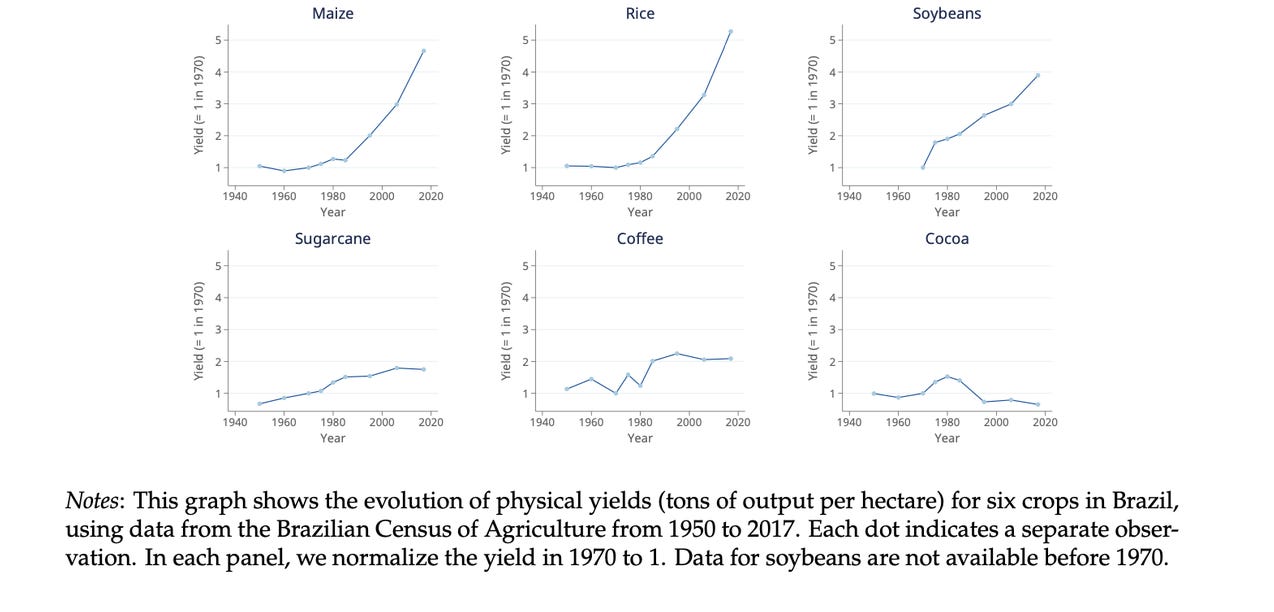
But was this actually because of investments in these R&D centers or something else?
The authors of this paper carefully estimate the causal impact of the rollout of Embrapa centers. As a first step, the authors find that Embrapa scientists were significantly more likely to study their centers’ own local ecological conditions rather than conditions elsewhere. This redirected research effort toward problems most relevant to local farmers in each municipality with an Embrapa center.
So did this increase in research output towards localized problems impact agricultural productivity?
They find that it did. Places with an Embrapa center experienced increases in agricultural productivity, but not only that - the authors also show that places with ecological conditions more similar to those near Embrapa centers experienced larger productivity gains, even when those places were geographically distant from the labs themselves.
Using this ecological exposure advantage of places that did not have an Embrapa center, but benefited nevertheless, the study estimates substantial gains in agricultural productivity. Overall, Embrapa’s research investments are estimated to have increased aggregate agricultural productivity in Brazil by roughly 110 percent, with a benefit-cost ratio of about 17 to 1.
And this pattern is not unique to this program. Across health, agriculture, and scientific publishing, we repeatedly see evidence that relatively modest investments in LMIC science can generate outsized returns, particularly in comparison to investments in science and innovation in higher-income countries, like the U.S. The figure below illustrates additional evidence from prior studies showing the returns per dollar invested in neglected disease R&D and agricultural productivity (top panel - evidence from here, here and here), as well as comparative estimates of the cost of producing an academic publication in LMICs versus the U.S. (bottom panel - evidence from here and here.).
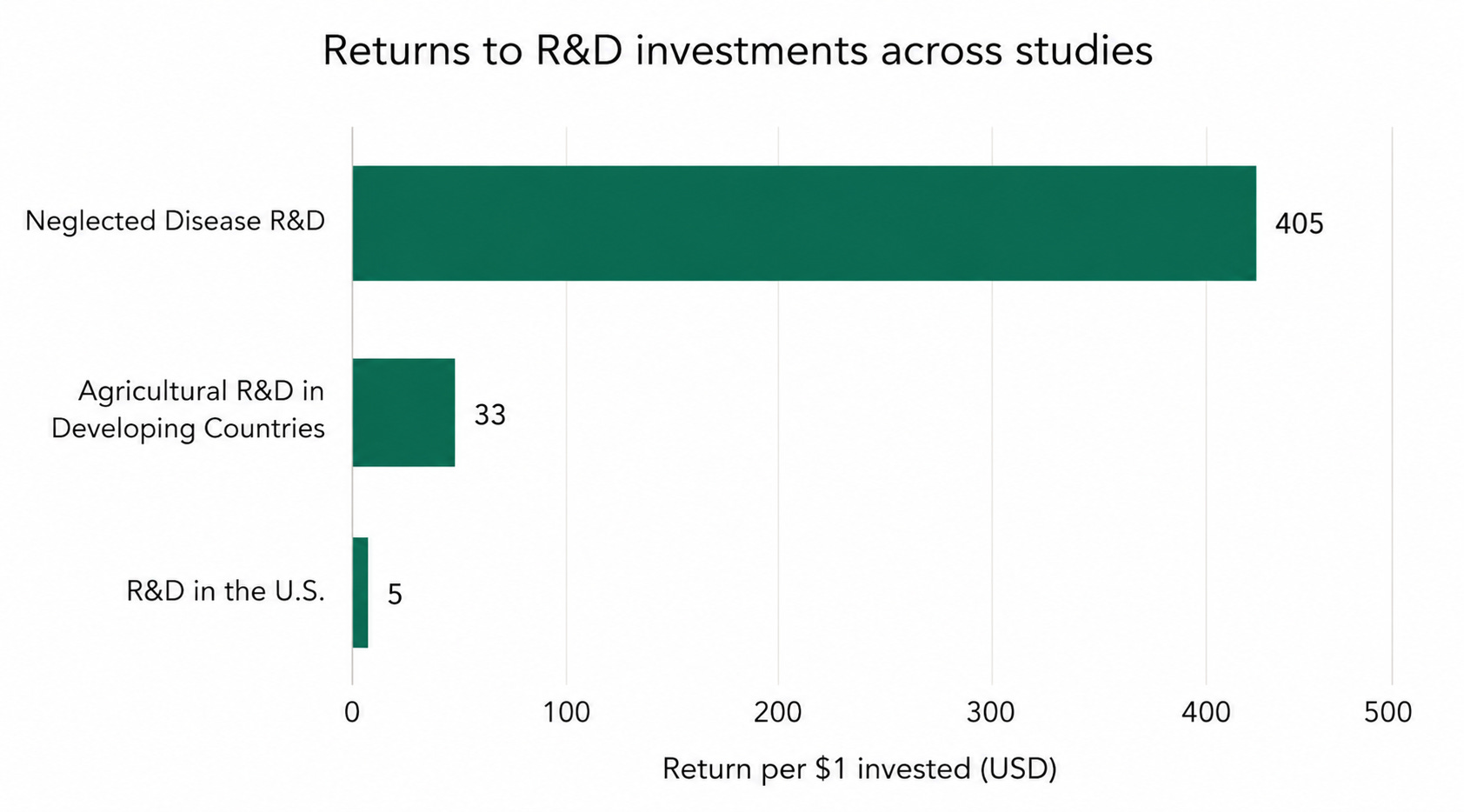
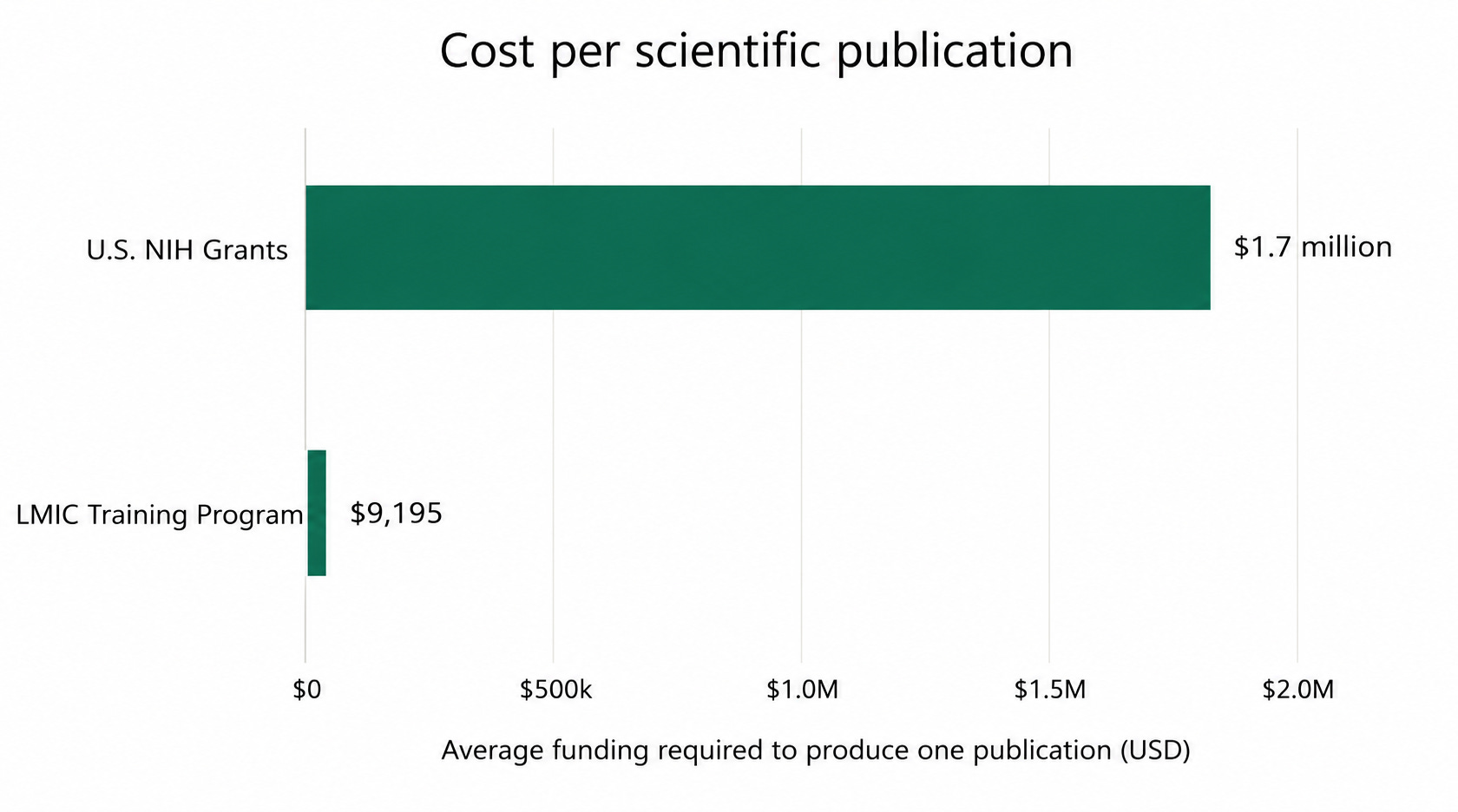
Note. These figures should be taken with a grain of salt, as cross-study comparisons are difficult due to differences in methodologies, outcomes measured, and the scope of R&D returns considered. Nonetheless, they suggest (1) the value of developing more comparable and credible estimates of returns across settings and (2) that even if investments in LMIC science had half the return we see here, they would be a good investment.
Not only are there high returns overall, but science that takes place in LMICs is also important for solving local problems that might not be solved otherwise. Many LMIC challenges are context specific and emerging research has found that what gets researched depends on where researchers are located. Which implies that fewer researchers in some locations would result in less research on issues affecting those places.
One of Caroline’s papers looked at scientific responses to the 2014 Ebola outbreak in West Africa. Scientists in the affected countries were significantly more responsive during the outbreak than otherwise similar scientists elsewhere. In large part, this was because they had access to the local knowledge, patients, samples, and institutional context needed to do the work quickly.
We are also beginning to accumulate evidence that policymakers, medical professionals, and even patients often place greater trust in locally generated evidence, or evidence that is about populations similar to them, rather than evidence produced elsewhere. So building scientific capacity in LMICs is not just about producing knowledge, it’s also about making knowledge usable.
And finally, science in LMICs produces spillovers that benefit everyone. Research conducted in LMICs contributes to disease outbreak control, agricultural resilience, and climate adaptation globally. Knowledge generated anywhere can diffuse everywhere.
The scale of the imbalance
Despite the clear benefits of LMIC science, global science remains extraordinarily concentrated, and global scientific output remains highly unevenly distributed. The figure below shows that publications per capita are concentrated in high-income countries, and limitations in data availability mean that scientific contributions from many LMICs are difficult to measure accurately.
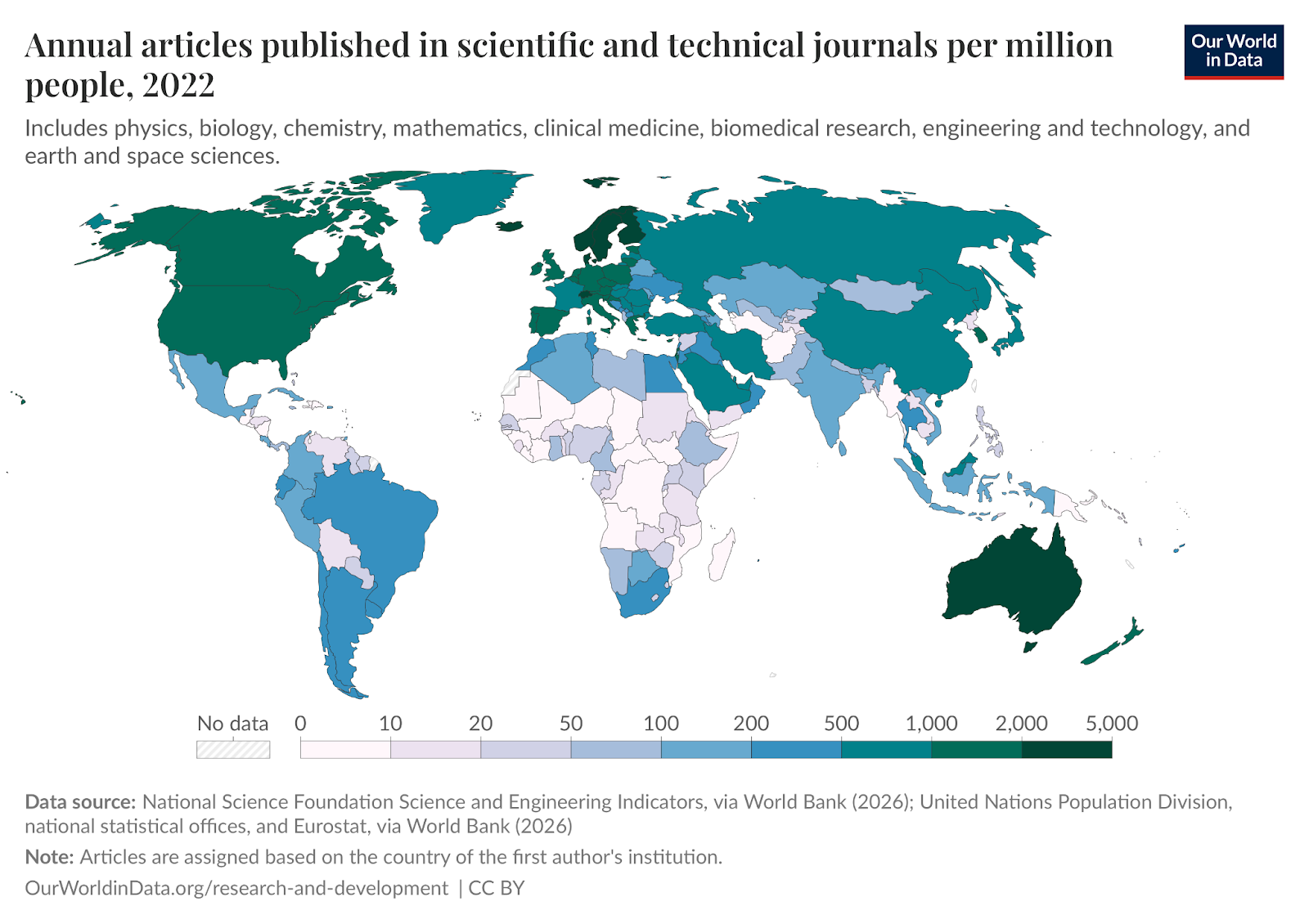
The same is true for R&D spending.
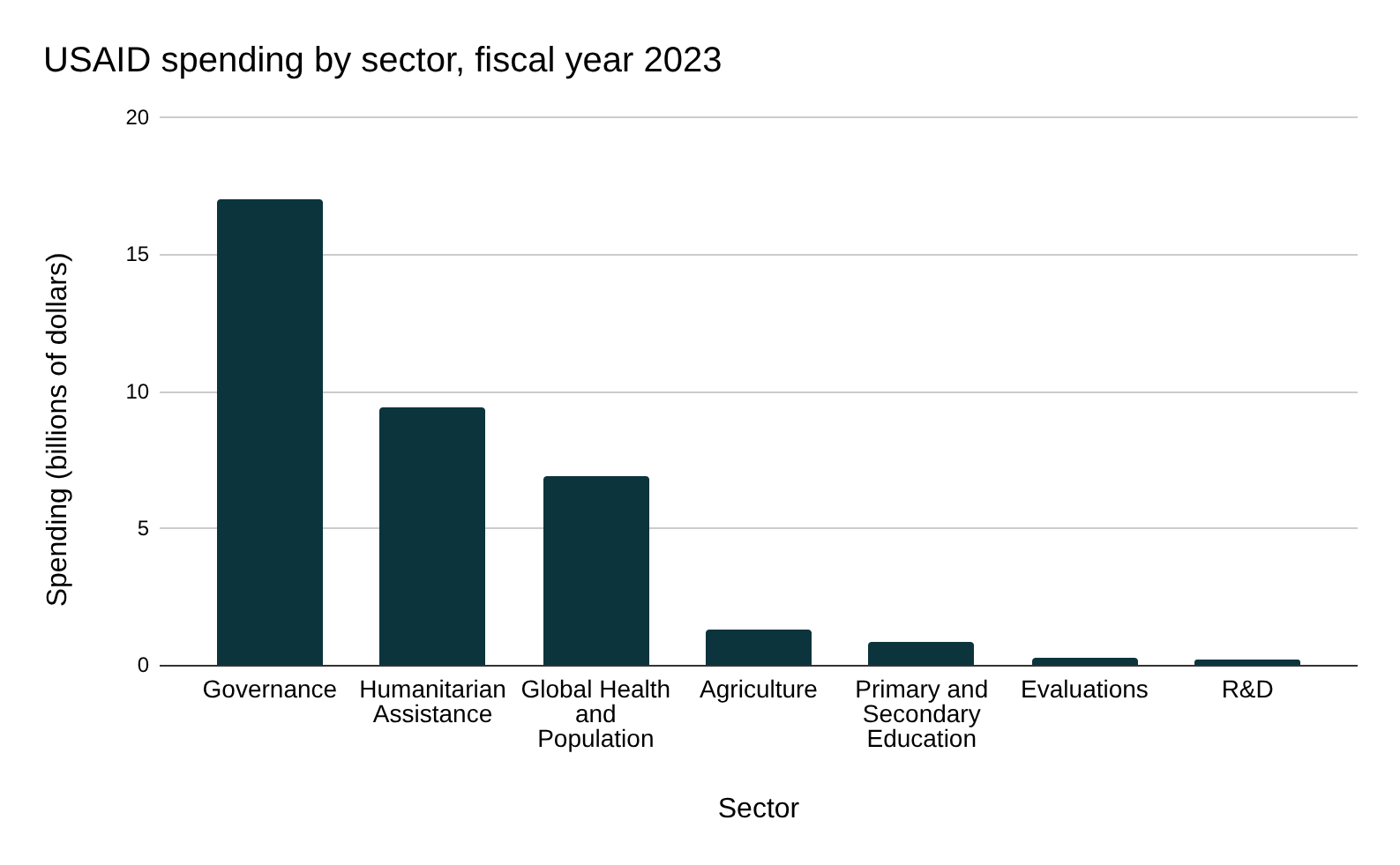
But one thing that became very obvious while preparing for our May 2026 workshop is how difficult it is to even quantify development-related scientific investment (although we provide some estimates below). Government data on R&D spending in LMICs is difficult to find, as is foreign aid and philanthropic spending in LMIC science and innovation. USAID, for example, reported around $252 million in R&D spending in FY2023. But that number is almost certainly incomplete. The agency spent more than $270 million on evaluations alone that year, some of which arguably qualify as research activity (and some of which may have been reported as part of the $252 million in R&D expenditures - we just don’t know). And even where spending data exists, we often do not know how much of that spending actually supported LMIC researchers directly versus supporting research conducted elsewhere. This data gap matters because it makes serious prioritization extremely difficult.
What seems to matter
Given that right now increasing donor funding for science might be challenging, we can turn to considering the most effective levers for promoting science in LMICs.
Broadly, we organize the evidence on these levers into a few categories: human capital, networks, funding, and institutions/infrastructure.
Human capital
A growing body of research suggests that training and mentorship programs that aim to develop human capital in LMICs matter a great deal for science conducted in these contexts.
One example is a paper studying the Structural Transformation of Agriculture and Rural Spaces (STARS) fellowship program, which pairs African scientists with mentors at U.S. universities. The authors of this paper compared finalists who participated with finalists who narrowly missed out due to mentor availability rather than applicant quality. They found meaningful increases in citations and longer-term scientific engagement among participants.
What stands out from this work is that the benefits are often not purely technical. Trainees consistently emphasize the importance of learning the “hidden curriculum” of science: navigating ethics approvals, publication processes, collaboration norms, grant writing, and professional networks.
Other studies exploring alternative U.S. fellowship structures for foreign scientists (like the Fogarty Scholars and Fellows Program) report positive results as well. Benefits don’t just accrue to the participants, though; they also spill over to the participants’ colleagues.
Networks
Scientific networks may be one of the most underestimated drivers of productivity.
There is growing evidence that internationally mobile scientists help connect researchers in their home countries to global scientific communities. These links facilitate collaboration, information flows, and access to opportunities.
For example, Caroline studies African scientists who participated in the NIH Fogarty AIDS International Training and Research Program (AITRP), which supported periods of training in the U.S. She finds substantial spillover effects on the colleagues of trainees who returned home after their training. These spillovers appear to arise because returning trainees acted as bridges between U.S.-based scientists and researchers in their home countries, creating new collaborative connections and closing previously disconnected parts of the scientific network.
Funding
The evidence on the impact of providing financial support directly to scientists, particularly those based in LMICs, remains surprisingly limited. Nevertheless, the existing studies suggest that grants and prizes can substantially increase scientific productivity, with effects that may be especially large in settings with lower initial levels of scientific capacity. For example, a study examining research grants in the USSR finds sizeable impacts on scientific output. As discussed earlier, these effects appear particularly large when compared with estimates of the returns to research funding in the U.S., suggesting that investments in under-resourced scientific systems may generate especially high returns.
Institutions and infrastructure
Lastly, the institutions, incentives and infrastructure supporting scientists appears to matter. A study from the Indonesian context shows that the introduction of publication-linked incentive systems shape the behavior of scientists in very predictable ways, and promote scientific output in the country. And although not evidence from LMICs, recent work has found that access to equipment and open data can dramatically change who is able to participate in science, which gives promising insight into what we might expect if these inputs are made widely available.
This evidence provides a strong starting point, and, if translated effectively into policy and funding decisions, could help unlock substantial scientific and societal benefits. However, we still have major gaps in our knowledge. Much of the existing economic evidence comes from a small number of programs, countries, and interventions, leaving important questions unanswered about what works, for whom, and under what conditions.
In our next post, we’ll explore these unanswered questions and outline a research agenda for understanding how investments in science can most effectively contribute to development, innovation, and problem-solving in low- and middle-income countries.

