


This is a guest post from my friends Andrew Gerard and Caroline Fry about R&D in low- and middle-income countries - a subject that I think deserves far more attention.
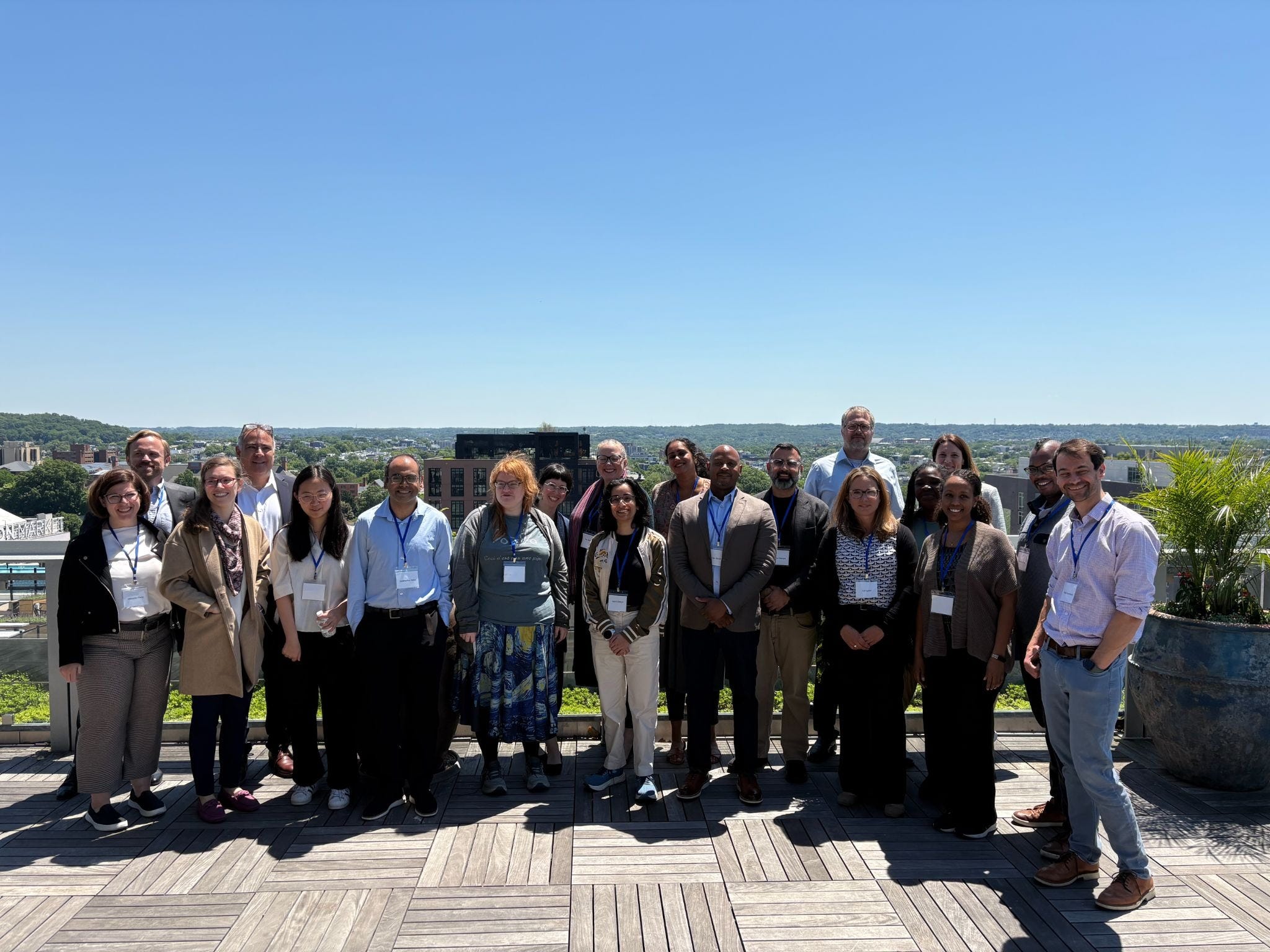
A few weeks ago, we brought together people who had worked on international science in the U.S. government, researchers who study innovation and economic growth, and practitioners who design and implement programs to support science in low- and middle-income countries (LMICs) - some of our favorite thinkers and doers in science for international development. We met in Washington, D.C., to discuss what we know about science in LMICs: its returns on investment, what works in strengthening scientific capacity, and how those of us working from the U.S. and Europe can help advance it.
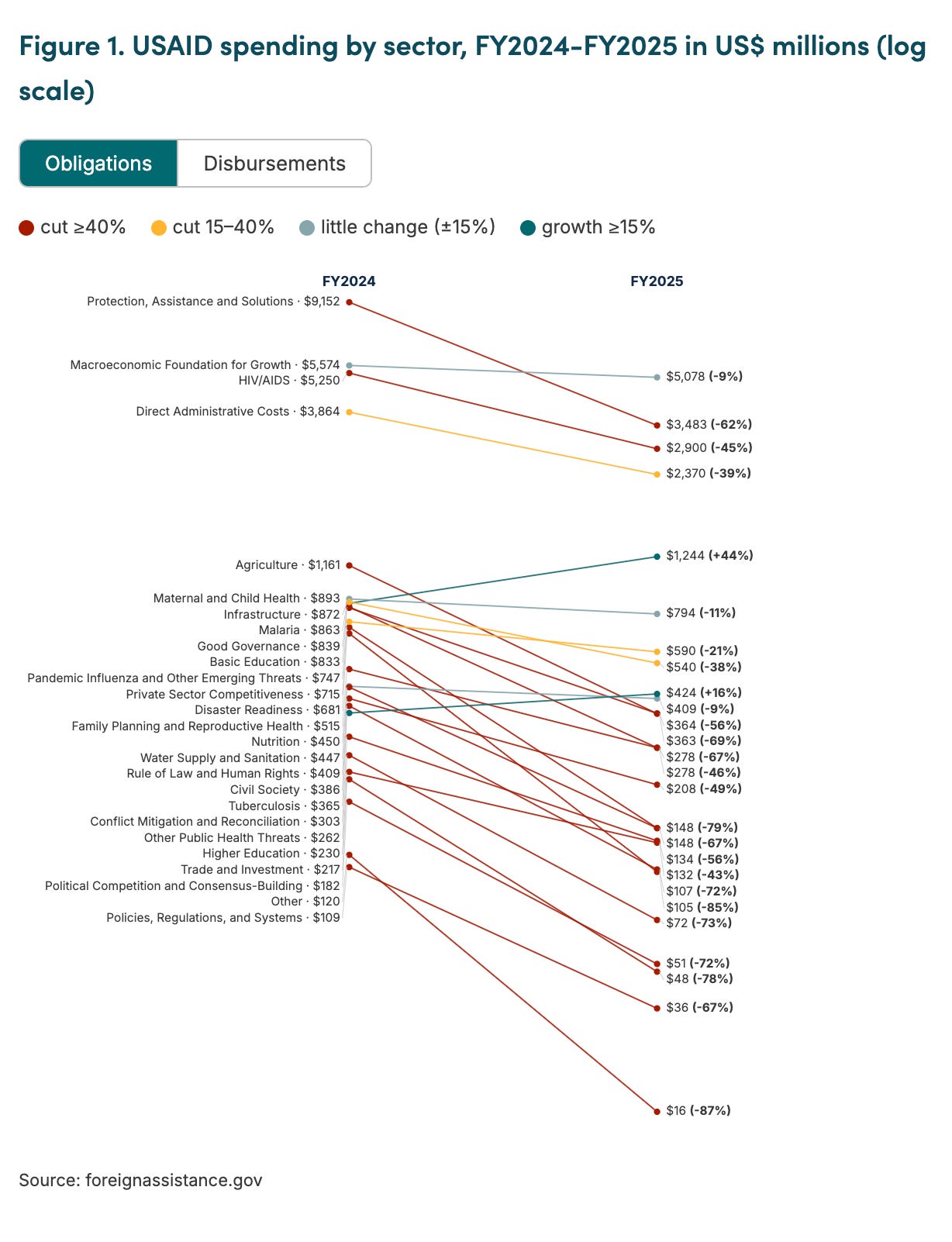
Even before the shutdown of USAID and the pulling back of other funding sources, science accounted for only a small share of U.S. government and philanthropic spending. And while evidence of the high returns to research and development (R&D) in low- and middle-income countries (LMICs) has grown substantially, our understanding of what works in strengthening scientific capacity has remained relatively limited. When Andrew worked at USAID, for example, there was little rigorous evidence to guide investments in science systems. With these existing challenges, and new resource limitations, we felt like it was a critical time to get together and try to make some progress on key questions that keep us all up at night around science for development.
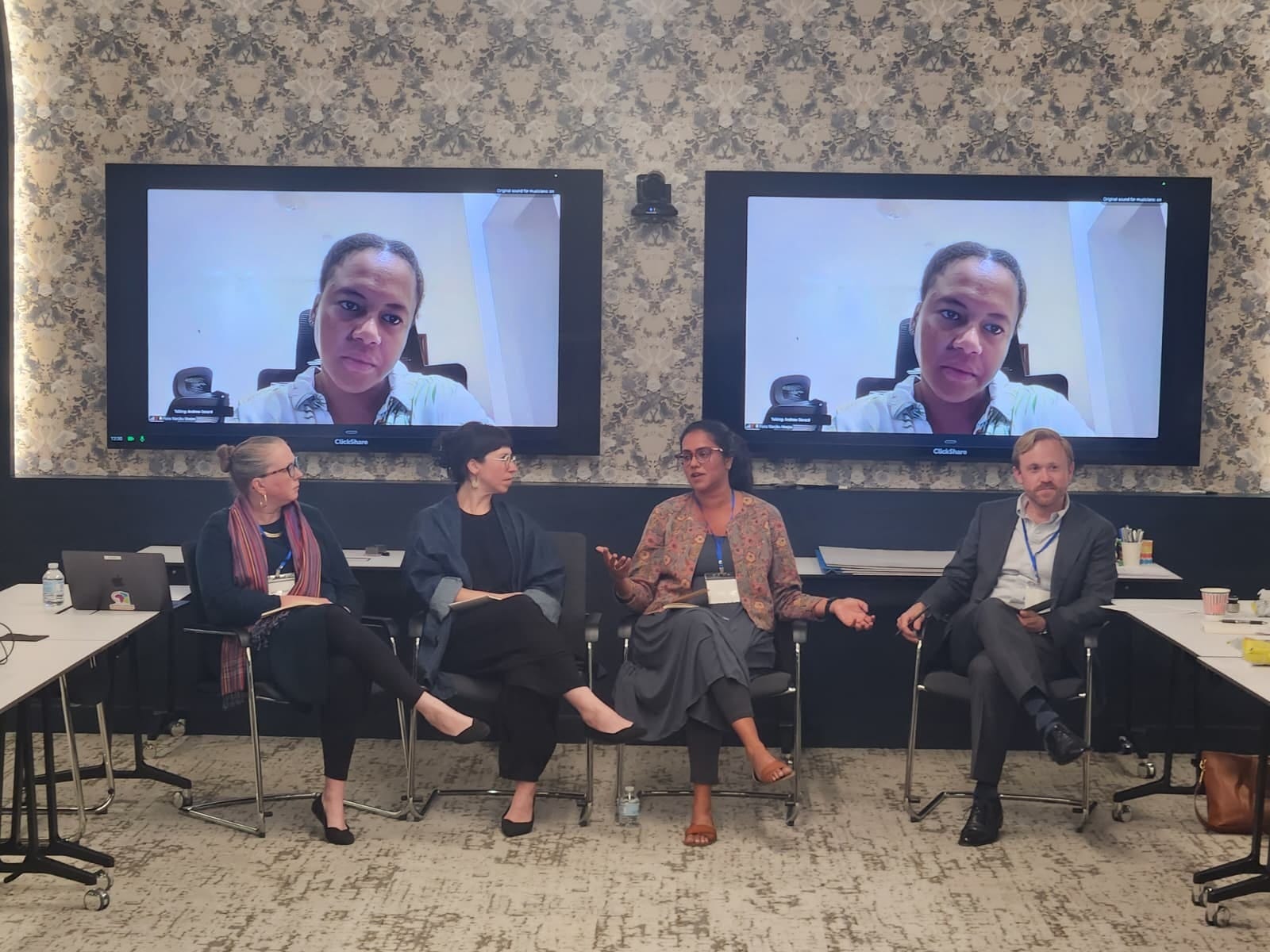
In this workshop, we aimed to take stock of where the field stands today and explore what is needed going forward. Over the course of the day, we began with a presentation by Caroline and Liz Lyons (UC San Diego) about the evidence base for science in LMICs and evidence gaps. We then convened a panel of leaders implementing science-for-development initiatives: Fiona Moejes (Mawazo Institute - calling in from Kenya), Amy Jamison (Alliance for African Partnership at Michigan State University), Sasha Gallant (DIV Fund), Maya Ranganath (Center for Effective Global Action at UC Berkeley). They discussed a range of approaches, including a multi-university U.S.–Africa partnership, support and funding for women PhD students in Africa, scaled funding for development innovations, and training and fellowship programs for economists from LMICs.
Finally, we facilitated a theory-of-change exercise, asking participants to map pathways for strengthening science in LMICs and imagine what success might look like in the future. Some of the outcomes participants focused on included:
Speeding up science funding and facilitating riskier bets
Increasing the quality and quantity of LMIC publications
Increasing the number of science graduate degrees in LMICs
Ensuring that science investments support local livelihoods
The insights from these discussions and activities shaped the reflections that follow. We begin with a few high-level takeaways before turning to some more specific observations that jumped out during the workshop.
General reflections
This was a truly impressive group of people - intellectually curious, deeply committed, and eager to find ways to strengthen science in LMICs. Despite having no budget to support travel, participants came from across the U.S. and the United Kingdom, and our panelist Fiona Moejes would have joined in person from Nairobi had travel disruptions not intervened. There was a shared sense that this is an underappreciated, but critically important, topic. We were already convinced of the need for more evidence and ability to better translate evidence to decision-makers, but this further solidified that belief.
It is important to acknowledge who was not in the room. Given the constraints of a small budget and a Washington, D.C.-based meeting, we were unable to engage many of the leaders and practitioners working on science systems within LMICs themselves. Our hope is that we can hold future convenings that place greater emphasis on regional perspectives and locally grounded challenges and opportunities.
Some more specific thoughts from participant discussions:
Evidence on what works to improve science in LMICs (and its importance) exists - but it is fragmented, under-visible, and weakly connected to decision-making
One theme that emerged in our discussions was that while some evidence exists on the importance of science in LMICs, and on what works to strengthen it, it is fragmented, under-visible, and only weakly connected to decision-making.
Existing evidence suggests a high return on investment to LMIC science (look for more on this in an upcoming blog!). For example:
Research into local environments and factors in LMICs – such as agriculture, which varies widely by climate – can boost productivity massively. For example, Embrapa, Brazil’s agricultural research program, increased aggregate agricultural productivity in Brazil by 110%, with a benefit cost ratio of 17.
R&D in LMICs can also have a much higher return on investment than in the US, with lower research costs and more low-hanging fruit to pick.
Scientists from LMICs that are trained in the US produce spillovers, increasing their local colleagues’ productivity as well.
But we need more social scientists to study this and more evidence on how best to support LMIC science (funding, human capital, institutional strengthening, etc.).
We have noticed that awareness of the existing evidence base was surprisingly low, even among participants who deeply engage in science, innovation, and development. Relatedly, we came away with the sense that there are few institutions or systems focused on synthesizing evidence about science and innovation in LMICs and translating it for policymakers, funders, and practitioners. There is no think tank for innovation in LMICs, for example. Even for decision-makers who want to use evidence, finding the relevant research can be difficult.
This reinforced our view that strengthening the evidence ecosystem requires more than producing new research (which is important too!). It also requires investing in the institutions, networks, and intermediaries that can help existing evidence inform decisions.
We should design programs that are both useful and which we can learn from
Many programs already exist that could help us learn more about how to strengthen science in LMICs. For example, there were four different fellowship programs represented at the workshop, alongside a range of other initiatives focused on funding, training, and scientific capacity building.
But it is a challenge that many programs are not designed to be effectively studied. For example, they might have a very small number of participants, their selection approaches may be inconsistent, or they simply might not collect needed data.
We see an opportunity to address this in two ways. First, by evaluating existing programs more systematically, including exploring ways to combine data across similar initiatives when individual programs are too small to study on their own. Second, by designing new programs with learning built in from the start. Such programs can simultaneously strengthen science in LMICs and generate evidence that helps improve future investments.
Context matters more than we might account for
A strong theme that emerged was that “what works” in strengthening science in LMICs is highly context dependent: an approach that is effective in one country may not transfer well to another. For example, evidence suggests that fellowships for women may be less effective in countries with low gender equality, even within the Global South. Relatedly, there was discussion about how definitions of “impact” themselves can vary across settings, raising the question of whether we are consistently using the right measures.
This has several implications. First, because one of the issues is a lack of data and understanding of cross-country differences, it suggests a greater need for comparative and descriptive work alongside causal methods such as randomized controlled trials. Second, it points to the importance of deeper understanding of institutional differences across countries and contexts, rather than assuming interventions will generalize easily across LMICs. Finally, it underscores the importance of rethinking how we define and measure outcomes when evaluating programs or assessing the return on investment in this space. In particular, it highlights the value of working more closely with LMIC partners to define what impact looks like in different contexts.
The customer for this evidence is likely changing
An issue that came up repeatedly was the question of who the “customer” for evidence on strengthening science in LMICs actually is. There is growing and increasingly rigorous evidence on the importance of science in LMICs, and on approaches to building scientific capacity, that could inform decisions by governments, donors, and implementers. But do they want the information? Will this change decisions and behavior? And can we be more specific about who the customer is for the evidence?
Potential users of this evidence include LMIC governments, think tanks, NGOs, and universities, though the form and framing of evidence likely needs to be tailored to their specific needs and contexts. More innovation and science policy think tanks in LMICs themselves are warranted! One model that could work to build these is partnerships between institutions in high-income countries and LMICs to generate and disseminate evidence. For example, Berkeley’s Center for Effective Global Action has been effective in partnering with LMIC universities on economics research and capacity strengthening, and a similar approach could be applied to building knowledge on what works in strengthening LMIC science systems.”
Foreign donors and implementers are another key audience. We’re in a new age of development. The US government and other high-income countries are increasingly transactional and the arguments for foreign aid that were used before may not work now. While it may be unrealistic to expect major near-term U.S. government engagement on science in LMICs, European and Asian governments, multilateral institutions, and regional development banks continue to invest in science cooperation. For these, having access to better evidence on what works is especially important.
International philanthropy is also likely to play a growing role in funding LMIC science, particularly given the massive potential expansion of philanthropic funding in the U.S. Historically, philanthropic organizations have made substantial investments in LMIC science - even when the evidence base was relatively limited (for example, through funding the Green Revolution or founding the Consultative Group for International Agricultural Research). Philanthropy should draw on evidence about what works in LMIC science and help support the development of that evidence base itself.
LMIC scientific capacity still matters - even with AI
While working on the theory of change for human capital, we asked whether the need for improved scientific and technical capacity in LMICs might be reduced or even eliminated by advances in AI.
We think that is unlikely. Many of the most important challenges facing LMICs are deeply contextual, persistent, and not easily generalized, including complex physical data collection (soil samples, output from crops grown in different micro climates, blood draws, water samples) and few other researchers have studied them. While AI may automate certain tasks and reshape parts of the service sector (e.g., through the automation of call centers), it is unlikely to reduce the need for locally grounded research and scientific capacity.
The core ingredients of scientific systems (human capital, funding, networks, and institutions) will still be required in a world with powerful AI. If anything, they may become more important for ensuring that AI is used effectively in diverse local contexts.
It’s really hard to know how AI will affect LMICs. Development is hard to predict, and it’s difficult to know how AI will affect LMICs, development trajectories, or the returns to R&D. This uncertainty itself suggests a need for economists and other researchers to think more creatively about how technological change interacts with scientific capacity and development outcomes.
Diffusion from high income countries isn’t going to solve LMIC problems (but it can help)
A question raised by a participant was whether it might be more effective to incentivize top researchers in the U.S. and other high-income countries to work on problems relevant to LMICs. As acknowledged in the question (and written about by Caroline with Matt Clancy here), a scientist’s geography influences what they study - and HIC researchers don’t tend to study the things most important to LMICs.
While research conducted in high–income countries ultimately improves lives around the world (e.g., through basic research that feeds into new technologies, biomedical research that leads to new drugs), that doesn’t negate the need for local research in LMICs.
Incentivizing U.S. researchers to focus on LMIC issues would be great, but also is likely to leave three gaps still: 1. It can be very expensive 2. Many findings are not easily translatable and 3. Having local intellectual talent is a national sovereignty and security issue.
Final thoughts - and more to come
We’re convinced, even more so now, that we need more evidence and that we need to better disseminate it. We’ll share more thoughts - including a summary of Caroline and Liz Lyons’ evidence presentations - soon.


It seems common for rich people to donate to set up buildings or institutes at universities in rich countries. This benefits the global advancement of knowledge. But would there be more global research benefit if rich people donated to set up institutes at universities in poor countries? I suppose this would help slow brain drain, and would buy more knowledge per dollar because salaries are much lower in poor countries.